The 20 Daily Habits That May Be Causing Your Body Swelling
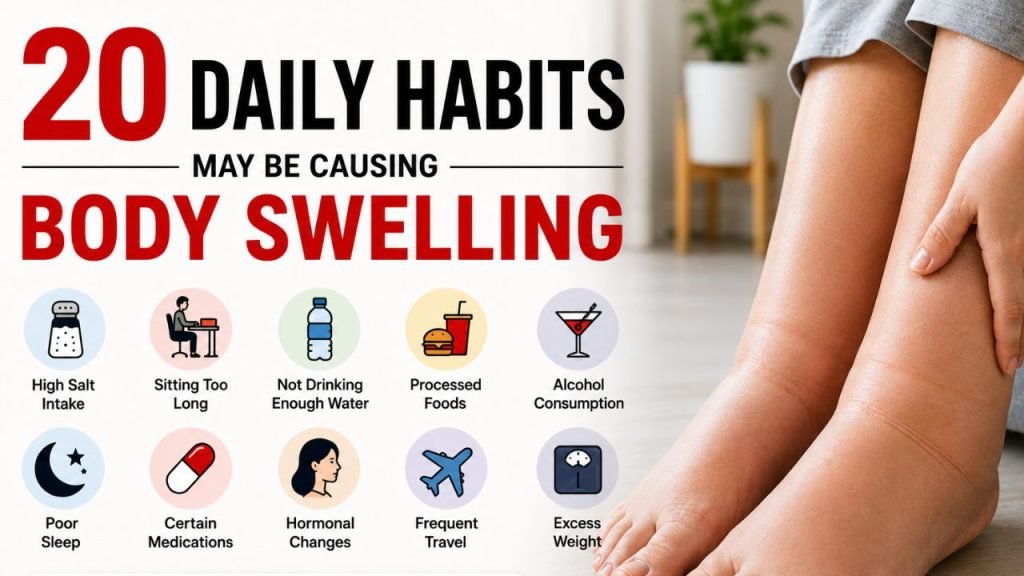
Most people who deal with persistent puffiness, swelling in their face, hands, legs, or ankles assume it is simply water retention or a consequence of eating something salty the night before — never suspecting that the specific habits they repeat every single day are the real and ongoing cause of the fluid imbalance their body cannot seem to correct on its own. Swelling, medically known as edema, occurs when fluid leaks out of the blood vessels and accumulates in the surrounding tissues, and while it can be caused by serious underlying conditions, the vast majority of everyday swelling is driven by lifestyle factors that affect circulation, lymphatic drainage, hormonal balance, kidney function, and inflammation in ways that are entirely modifiable.
20 Daily Habits That May Be Causing Your Body Swelling :
1. Eating too much sodium every day
Sodium is the single most powerful dietary driver of fluid retention, and most people consuming a modern diet are taking in two to three times the recommended daily amount without realizing it because the majority of dietary sodium comes not from added table salt but from processed foods, bread, sauces, deli meats, and restaurant meals. When sodium intake is consistently high, the kidneys retain water to dilute the excess salt in the bloodstream, and this additional fluid volume leaks into surrounding tissues and produces the puffiness in the face, hands.
2. Not drinking enough water throughout the day
Chronic mild dehydration is one of the most counterintuitive causes of water retention because the body’s response to insufficient fluid intake is to hold onto every drop of water it has, essentially hoarding fluid in the tissues as a protective mechanism against further dehydration. This means that people who drink very little water throughout the day often carry more visible puffiness and fluid retention than those who stay well hydrated, because their bodies are in a persistent conservation mode.
3. Sitting or standing in one position for too long
Prolonged sitting, particularly with legs dependent and uncrossed, allows gravity to pull fluid downward into the lower legs, ankles, and feet in a way that the lymphatic and venous return systems cannot adequately counteract when the calf muscle pump is inactive for hours at a time. The calf muscles act as a secondary heart for the lower body — they squeeze venous blood and lymphatic fluid back upward with every step — and when they are inactive for extended periods, fluid pools progressively in the lower extremities. Breaking up sitting with short walks or even standing and doing calf raises every 45 to 60 minutes is enough to keep this pump active and prevent the end-of-day ankle swelling that prolonged sitting reliably produces.
4. Consuming alcohol regularly
Alcohol is a vasodilator that causes blood vessels to widen and become more permeable, allowing fluid to leak more readily from the circulation into surrounding tissues and producing the characteristic facial puffiness and eye swelling that most regular drinkers recognize as a morning-after effect. Beyond the immediate vasodilatory effect, alcohol disrupts aldosterone — the hormone that regulates kidney sodium and water retention — and impairs liver function over time, both of which contribute to more chronic and persistent fluid retention in people who drink regularly.
5. Eating a diet high in refined carbohydrates and sugar
Every gram of glycogen stored in the muscles and liver holds approximately three to four grams of water alongside it, which means that a diet consistently high in refined carbohydrates and sugar maintains elevated glycogen stores and the water weight bound to them simultaneously. High sugar intake also drives insulin spikes, and elevated insulin directly signals the kidneys to retain sodium and water, creating a hormonal pathway to fluid retention that is entirely separate from the glycogen storage effect.
6. Wearing tight clothing or accessories for extended periods
Tight waistbands, socks with tight elastic, compression clothing worn incorrectly, and rings or bracelets that fit snugly can all impair the local circulation and lymphatic drainage in the areas they constrict, causing fluid to accumulate in the tissues below the point of compression. The lower legs and ankles are particularly vulnerable to swelling caused by tight sock bands, and the fingers can swell noticeably around tight rings during warm weather or after sodium-rich meals when background fluid retention is already elevated.
7. Not moving your lymphatic system through exercise
The lymphatic system — the network of vessels responsible for draining excess fluid and waste products from tissues back into the circulation — has no pump of its own and depends entirely on muscle contractions, breathing, and movement to keep fluid flowing. A sedentary lifestyle means the lymphatic system moves sluggishly, and fluid that should be drained from the tissues accumulates instead, producing a diffuse puffiness that affects the face, abdomen, and limbs.
8. Eating processed and packaged foods as dietary staples
Beyond their sodium content, ultra-processed foods contain a range of additives including preservatives, flavor enhancers, emulsifiers, and artificial colors that create a low-grade inflammatory response in the gut and throughout the body — and inflammation is one of the primary mechanisms through which tissues swell and retain fluid. The combination of high sodium, high refined carbohydrates, inflammatory additives, and low fiber and micronutrient content makes processed foods a multi-pathway driver of fluid retention that is far more impactful than any single ingredient within them.
9. Sleeping in positions that restrict fluid drainage
Sleeping face-down compresses the lymphatic vessels of the face and restricts the natural overnight drainage of fluid from facial tissues, producing morning facial puffiness that is noticeably worse than in people who sleep on their back or side. Sleeping without any pillow elevation in the lower body also allows fluid that has pooled in the legs during the day to remain there rather than redistributing overnight.
10. Consuming too much caffeine
While caffeine has mild diuretic properties that might suggest it would reduce swelling, excessive caffeine consumption actually stimulates the adrenal glands to produce cortisol and adrenaline, and chronically elevated cortisol directly promotes fluid retention by increasing aldosterone activity and sodium reabsorption in the kidneys. People who drink multiple cups of coffee or consume caffeine through energy drinks, pre-workout supplements, and caffeinated teas throughout the day are maintaining a mild but persistent adrenal stress response that keeps their body in a sodium-retaining state for most of the waking hours.
11. Chronic unmanaged stress
Cortisol — the primary stress hormone — signals the kidneys to retain sodium and water as part of the fight-or-flight response, a mechanism designed to maintain blood pressure under threat conditions but one that produces unwanted fluid retention when it is activated chronically by the ongoing low-level stressors of modern life. People under chronic stress often notice persistent puffiness in the face and abdomen that worsens during particularly stressful periods and improves during holidays or rest — a direct reflection of the cortisol-driven fluid retention cycle.
12. Eating too close to bedtime
Eating a significant meal within two hours of sleep means the digestive system is active and demanding blood flow at exactly the time the body would normally be redistributing fluid and clearing inflammatory byproducts from the day. Overnight digestion of a large meal increases gut inflammation, disrupts the hormonal repair processes that normally occur during sleep, and produces morning bloating and facial puffiness that is directly traceable to the timing of the last meal.
13. Wearing high heels or unsupportive footwear daily
High heels alter the mechanics of the lower leg in a way that impairs calf muscle function and venous return, reducing the efficiency of the pump mechanism that moves blood and lymph back up from the feet and lower legs against gravity. Unsupportive flat footwear with no arch support produces a different but equally problematic effect, altering gait and reducing the spring-loaded compression of the plantar fascia that contributes to lymphatic and venous pumping with each step.
14. Taking certain medications without monitoring their effects
A wide range of commonly prescribed and over-the-counter medications list fluid retention and swelling as side effects, including calcium channel blockers used for blood pressure, corticosteroids, NSAIDs like ibuprofen taken regularly, certain antidepressants, hormonal contraceptives, and some diabetes medications. Many people take these medications for years without connecting the gradual increase in facial puffiness, ankle swelling, or abdominal bloating to their prescription, particularly when the swelling develops slowly enough to feel like a normal part of aging.
15. Not elevating your legs after prolonged sitting or standing
People who spend most of their working day either sitting at a desk or standing in one place accumulate fluid in their lower legs and feet through the gravitational effect described earlier, but many of them never take the simple step of elevating their legs above heart level during rest periods or in the evening to allow this fluid to drain back into the circulation. Even 15 to 20 minutes of leg elevation once or twice in the evening produces a visible and immediate reduction in ankle and lower leg swelling for people who deal with this regularly.
16. Eating too many inflammatory foods consistently
Foods that drive systemic inflammation — including refined vegetable oils, fried foods, red and processed meats, artificial additives, and excessive sugar — promote the release of inflammatory cytokines that increase vascular permeability and allow fluid to leak more readily from blood vessels into surrounding tissues throughout the body. This inflammation-driven swelling is more diffuse and generalized than sodium-driven puffiness and tends to affect the face, joints, and abdomen in a way that feels like a constant background bloatedness rather than the localized swelling of straightforward fluid retention.
17. Skipping breakfast and disrupting cortisol rhythm
Cortisol follows a natural daily rhythm, peaking in the morning to mobilize energy and declining through the day, and eating breakfast at a consistent time reinforces this rhythm by signaling to the body that the day has started and the stress response can begin its normal wind-down. Skipping breakfast disrupts this hormonal rhythm, extends the overnight cortisol elevation into the morning, and keeps the kidneys in a sodium-retaining state for longer than they would be with regular morning eating.
18. Poor sleep quality and insufficient sleep duration
During deep sleep the body activates the glymphatic system — a fluid clearance mechanism that flushes inflammatory waste products from tissues including the brain and face — and this clearance is dramatically reduced when sleep is shortened, fragmented, or insufficiently deep. Poor sleep also elevates inflammatory markers and cortisol, both of which drive fluid retention through the mechanisms described elsewhere in this list, creating a compounding effect where bad sleep makes swelling worse and swelling-related discomfort makes sleep harder.
19. Hormonal fluctuations from diet and lifestyle
Estrogen dominance — whether from excess body fat, exposure to environmental estrogens in plastics and personal care products, or insufficient liver clearance of used hormones — directly promotes fluid retention by stimulating aldosterone and increasing vascular permeability in ways that produce cyclical and sometimes constant bloating and tissue swelling. Many women experience dramatic fluid retention in the week before menstruation that goes beyond normal hormonal fluctuation and reflects an underlying estrogen-progesterone imbalance that diet, liver support, and stress management can significantly improve.
20. Breathing shallowly throughout the day
The diaphragm acts as a mechanical pump for the thoracic lymphatic duct — the main drainage vessel that returns lymphatic fluid from the entire lower body back into the venous circulation — and shallow chest breathing significantly reduces the pumping efficiency of this system, allowing lymphatic fluid to accumulate in the abdomen and lower limbs rather than draining efficiently. Most people breathe shallowly for the majority of their waking hours, particularly when sitting, concentrating, or experiencing stress, and this chronic reduction in diaphragmatic movement is a consistently overlooked contributor to generalized tissue swelling.
Disclaimer:
This article is for informational purposes only and is not a substitute for professional medical advice, diagnosis, or treatment. Persistent or sudden swelling can be a sign of a serious underlying medical condition including heart, kidney, or liver disease, and should be evaluated by a qualified healthcare provider promptly. Always seek guidance from a licensed medical professional for any personal health concerns.