The 15 Hidden Signs Your Liver May Be Overworked
The liver is the most hardworking and arguably the most underappreciated organ in the human body, performing over 500 distinct functions every single day including filtering toxins from the blood, producing bile for digestion, regulating blood sugar, manufacturing proteins, processing hormones, and storing vitamins and minerals that the rest of the body draws on when needed. Unlike the heart or lungs, the liver does not send obvious distress signals when it is struggling — it has no nerve endings that produce pain in the early stages of dysfunction, which is exactly why liver disease is so often caught late and why the early warning signs are so easy to dismiss as unrelated complaints about energy, digestion, skin, or mood. What makes the liver particularly remarkable is its capacity for regeneration — it is the only internal organ that can regrow from as little as 25 percent of its original tissue — but this resilience also means it can absorb an enormous amount of damage silently before the signs become impossible to ignore.
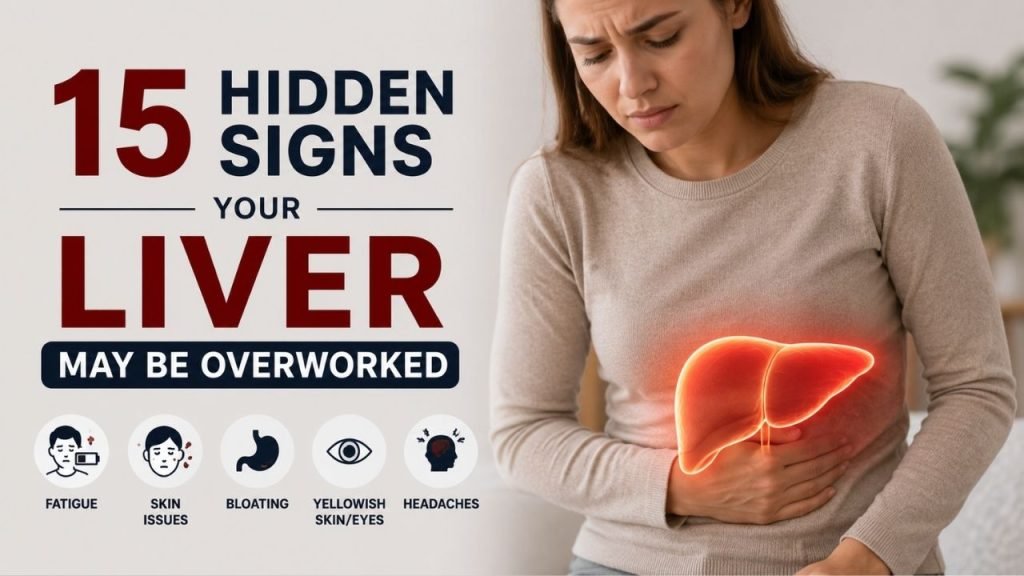
15 Hidden Signs Your Liver May Be Overworked :
1. Persistent fatigue that feels different from ordinary tiredness
When the liver is overworked it becomes less efficient at converting nutrients into usable energy, filtering metabolic waste from the blood, and regulating the blood sugar stability that underpins consistent energy throughout the day. The fatigue this produces is not the kind that improves after a good night of sleep — it is a heavy, pervasive exhaustion that is present regardless of rest and that many people carry for years without identifying its source.
2. Bloating and digestive discomfort after fatty meals
The liver produces bile, which is stored in the gallbladder and released into the small intestine to break down dietary fat, and when the liver is struggling, bile production and quality become compromised in ways that make fat digestion slow, incomplete, and uncomfortable. People with an overworked liver often notice that meals containing fried food, meat, dairy, or oils consistently produce bloating, nausea, a sensation of fullness that persists for hours, and sometimes a dull ache under the right ribcage where the liver sits.
3. Skin that is itchy without any visible rash
When the liver cannot efficiently process and excrete bile acids, they accumulate in the bloodstream and eventually deposit in the skin, where they stimulate nerve endings and produce a persistent itching that has no external cause and does not respond to topical treatments. This symptom — called pruritus — is one of the more distinctive signs of liver dysfunction and tends to be worst at night and on the palms and soles of the feet, though it can affect the entire body.
4. Yellowing of the skin or whites of the eyes
Jaundice — the yellowing of skin and the sclera of the eyes — occurs when the liver is unable to process bilirubin, a yellow pigment produced from the normal breakdown of red blood cells, at a sufficient rate to prevent it from accumulating in the blood and depositing in the tissues. Mild jaundice can be subtle enough to miss in artificial lighting and may only be visible in natural daylight or as a faint yellowing of the whites of the eyes that a person notices in a mirror.
5. Dark urine and pale or clay-colored stools
The color of urine and stool are both directly influenced by liver function — dark amber or brown urine indicates that bilirubin is being excreted through the kidneys rather than the bile ducts, while pale, grey, or clay-colored stools indicate that bile is not reaching the intestines in normal amounts. These changes in waste color are among the more reliable indicators of bile flow disruption and liver strain, and they often appear before more obvious symptoms like jaundice make the connection to liver function obvious.
6. Swelling in the abdomen, ankles, or feet
The liver produces albumin, the primary protein responsible for maintaining fluid balance between the blood vessels and surrounding tissues, and when liver function declines, albumin production drops and fluid begins leaking out of the circulation and accumulating in the abdomen — a condition called ascites — or pooling in the legs and ankles as edema. Abdominal swelling from fluid accumulation is distinct from bloating caused by gas — it tends to be consistent rather than coming and going, and the abdomen feels heavy and full rather than tight and gassy. Any unexplained swelling in the abdomen combined with ankle or foot edema in a person with other potential liver symptoms should be evaluated medically as a priority.
7. Nausea without an obvious cause
The liver is central to the processing and detoxification of everything absorbed from the digestive tract, and when it is overloaded or inflamed, the resulting buildup of toxins, bile acids, and metabolic byproducts in the bloodstream can produce persistent nausea that has no obvious digestive cause and does not resolve with standard antinausea approaches. This nausea tends to be low-grade and chronic rather than acute, is often worse in the morning before eating, and is frequently accompanied by a general loss of appetite and aversion to foods — particularly fatty or rich ones — that the person previously enjoyed.
8. A dull ache or feeling of pressure under the right ribcage
The liver sits beneath the right side of the ribcage and when it becomes inflamed or enlarged from overwork it can produce a sensation of fullness, heaviness, or dull discomfort in the upper right abdomen that many people dismiss as a muscle ache, digestive issue, or referred pain from poor posture. This discomfort is typically not sharp or severe in the early stages — it is more of a persistent awareness of something being present or uncomfortable in that area, occasionally worsening after meals or physical activity. Any consistent unexplained sensation in the upper right quadrant of the abdomen deserves investigation, particularly when accompanied by other symptoms in this list.
9. Hormonal imbalances and unexplained mood changes
The liver is responsible for breaking down and clearing excess hormones from the body including estrogen, cortisol, and insulin, and when it is overworked this clearance becomes inefficient, leading to hormonal accumulation that produces symptoms including mood swings, irritability, anxiety, depression, and in women, worsening PMS, irregular cycles, and estrogen dominance symptoms. Men with compromised liver function can experience elevated estrogen relative to testosterone, producing symptoms including fatigue, reduced libido, and emotional sensitivity that are rarely connected to liver function in clinical practice.
10. Spider veins or unusual vascular patterns on the skin
Small red spider-like blood vessel patterns appearing on the chest, face, or upper arms — called spider angiomas — are directly associated with liver dysfunction and occur because the liver is failing to break down estrogen efficiently, and excess estrogen causes small blood vessels to dilate and become visible through the skin. These are distinct from broken capillaries caused by sun damage or rosacea — they have a central red spot with radiating vessels that fan outward like a spider’s legs and typically blanch when pressed.
11. Brain fog, poor memory, and difficulty concentrating
When the liver is not adequately filtering ammonia and other neurotoxic byproducts of protein metabolism from the blood, these compounds cross the blood-brain barrier and directly impair neurological function in a way that produces cognitive symptoms ranging from mild difficulty concentrating and memory lapses to more significant confusion and disorientation in advanced cases. This liver-related cognitive impairment — called hepatic encephalopathy in its more serious form — begins subtly enough that people attribute it to stress, poor sleep, or aging long before anyone considers the liver.
12. Bad breath with a musty or sweet chemical smell
The liver processes and eliminates volatile compounds produced during normal metabolism, and when its function is compromised these compounds accumulate in the bloodstream and are eventually exhaled through the lungs, producing a distinctive breath odor that has been described as musty, slightly sweet, or chemical in nature — sometimes compared to raw liver or freshly turned earth. This specific breath quality, called fetor hepaticus, is distinct from the bad breath caused by dental hygiene issues, acid reflux, or dietary choices because it comes from deep within the respiratory system rather than the mouth or stomach.
13. Easy bruising and slower wound healing
The liver synthesizes the majority of the clotting factors that allow blood to coagulate properly when a vessel is damaged, and when liver function declines, the production of these proteins drops and the blood loses some of its ability to clot efficiently. The result is bruising that appears easily from minor contact, bruises that take longer than expected to fade, and cuts or wounds that bleed longer and heal more slowly than they previously did.
14. Increased sensitivity to alcohol and medications
One of the liver’s primary roles is detoxifying alcohol and processing pharmaceutical drugs, and when its capacity is reduced, even small amounts of alcohol produce disproportionately strong effects — a feeling of being drunk much faster than usual, worsened hangovers, or simply feeling unwell after amounts that previously had little noticeable impact. Similarly, medications that are processed by the liver may produce stronger side effects or remain active in the system for longer than expected.
15. Loss of appetite and unexplained weight loss
A struggling liver affects appetite through multiple pathways — reduced bile production makes eating feel unrewarding and often uncomfortable, accumulating toxins in the blood suppress hunger signals, and the nausea and abdominal discomfort that accompany liver strain make food consistently unappealing. This appetite loss is different from dieting or stress-related reduced eating — it is a genuine biological suppression of hunger that, when sustained over weeks or months, produces noticeable unintentional weight loss that cannot be explained by changes in diet or activity level.
Disclaimer:
This article is for informational purposes only and is not a substitute for professional medical advice, diagnosis, or treatment. If you recognize several of these symptoms in yourself, please consult a qualified healthcare provider and request a comprehensive liver function panel before drawing any conclusions. Always seek guidance from a licensed medical professional for any personal health concerns.